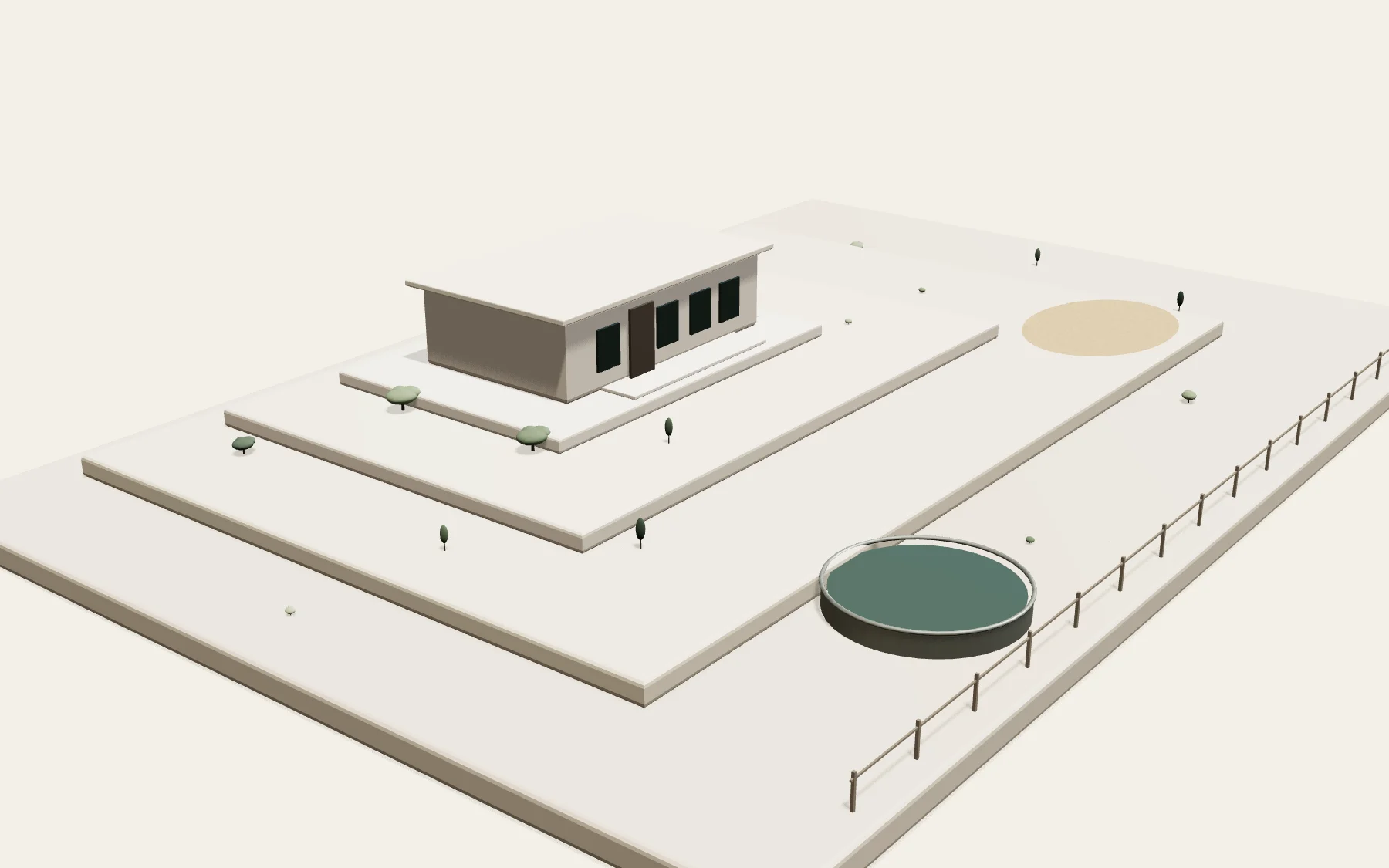
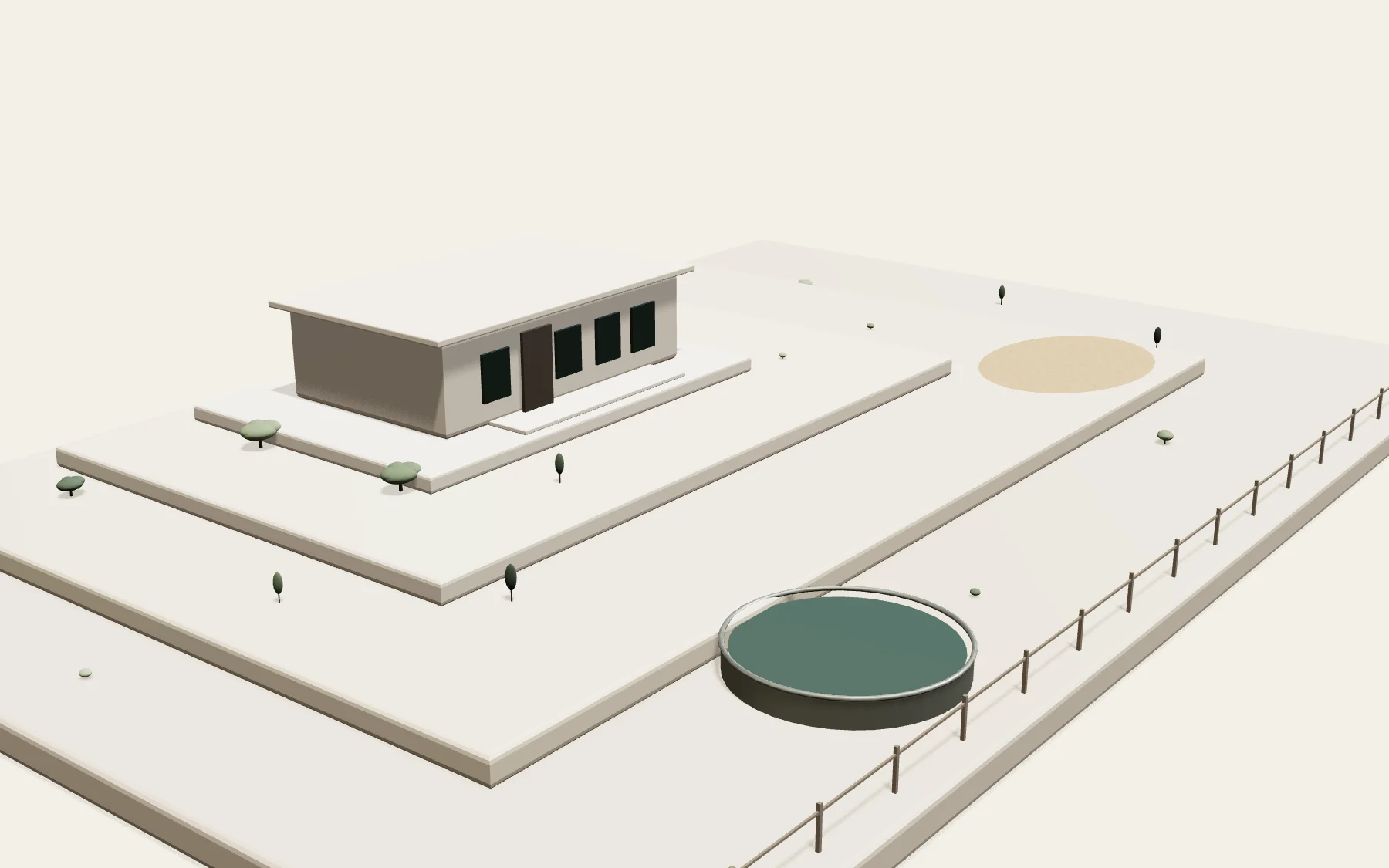
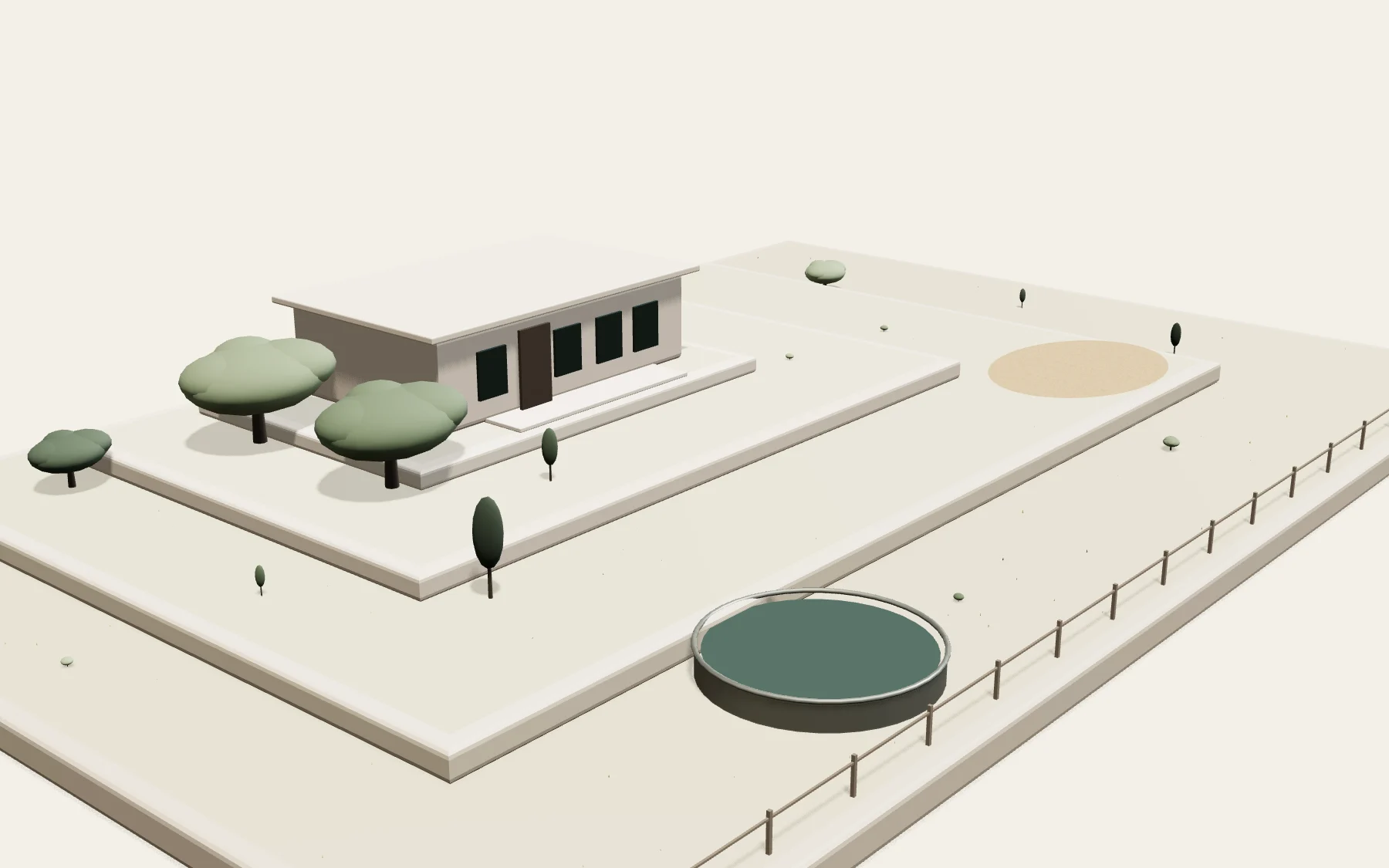
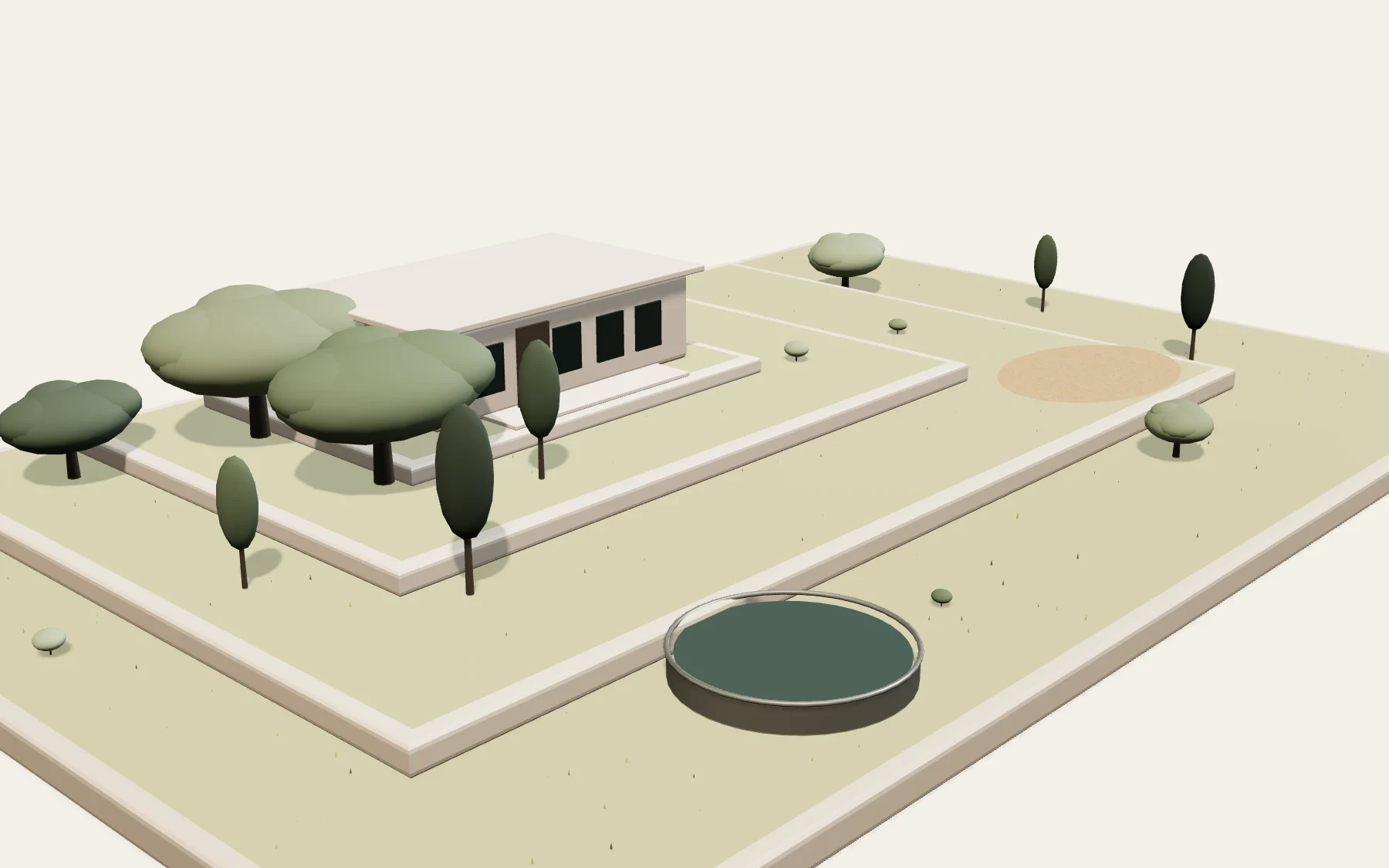
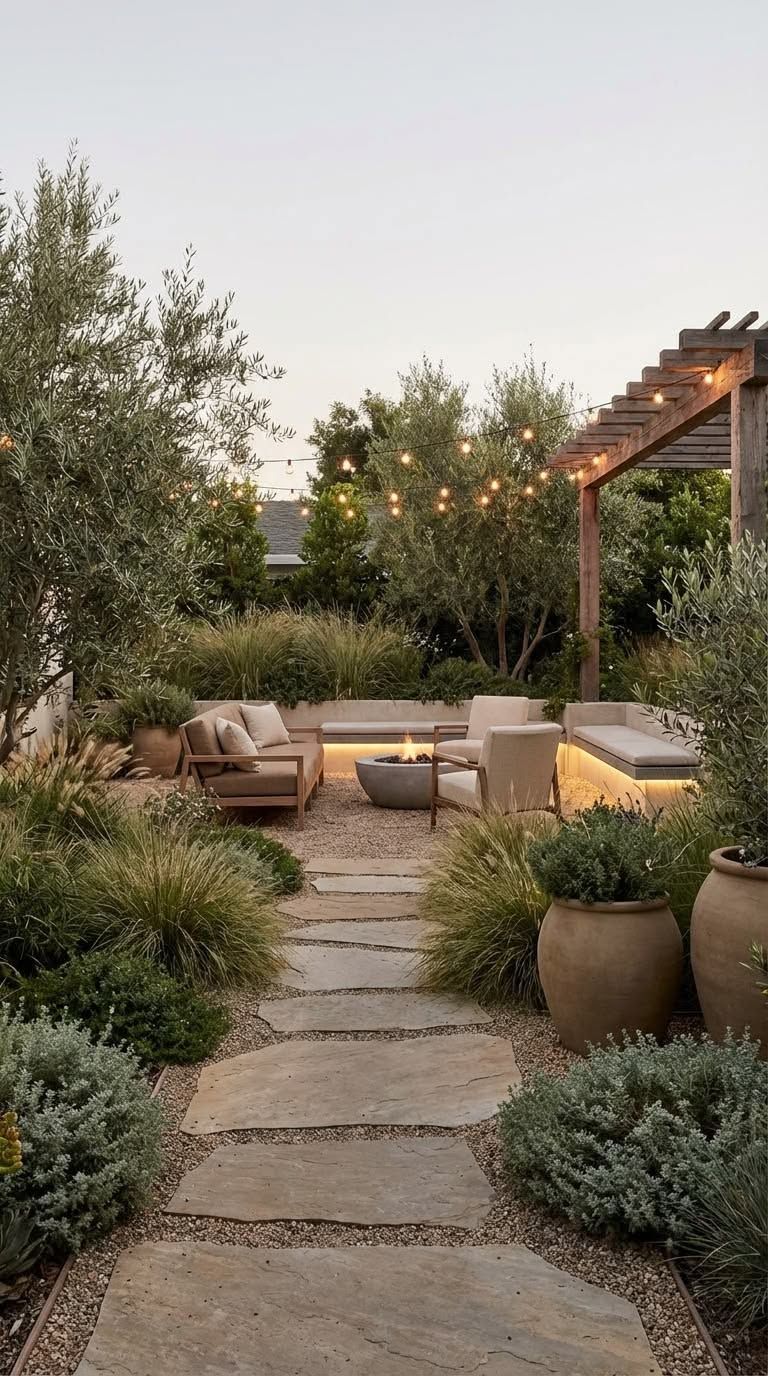
Caliche, deer, and a burn ban will edit the plan for you. We write that edit in before the first plant goes in the ground.
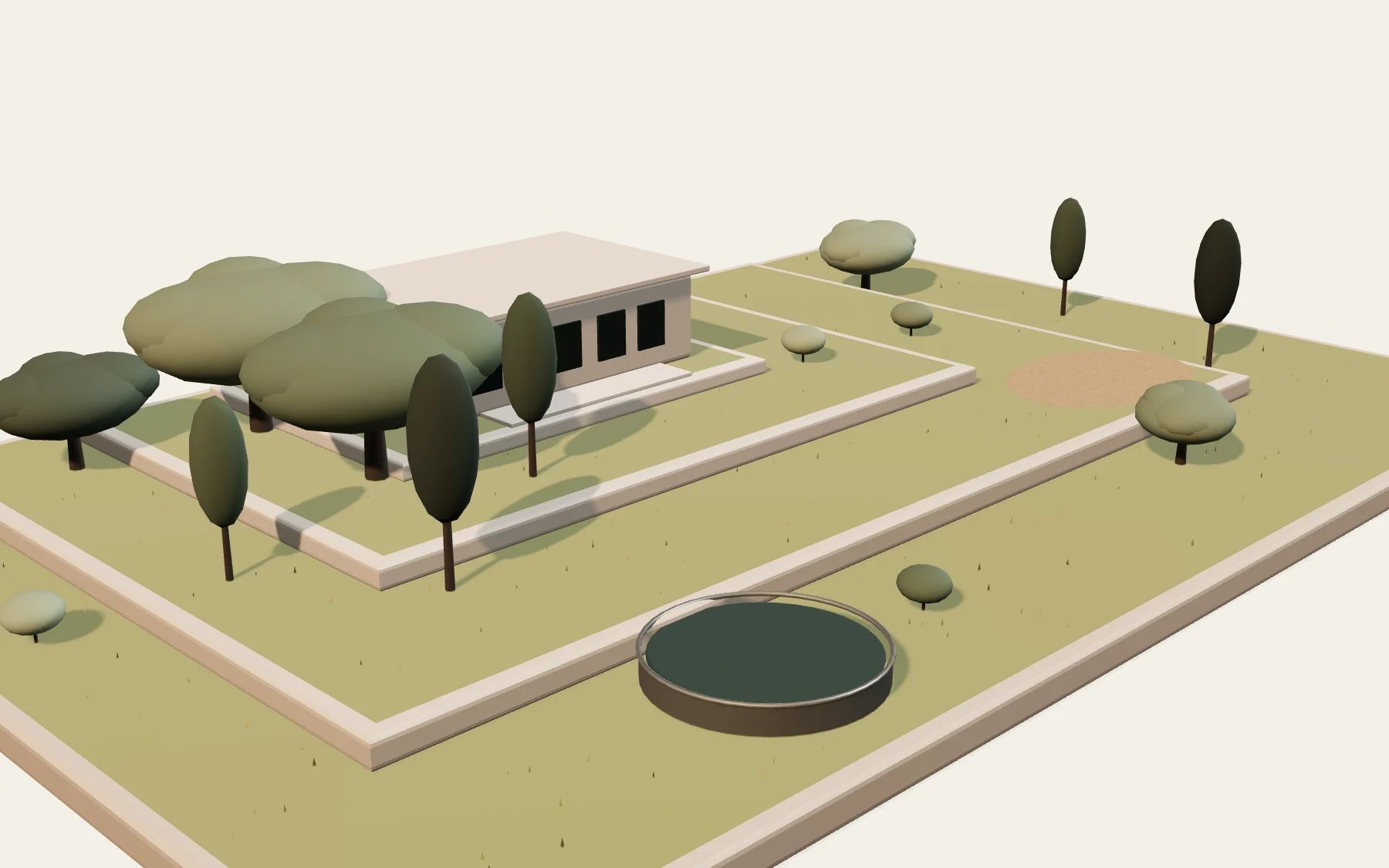
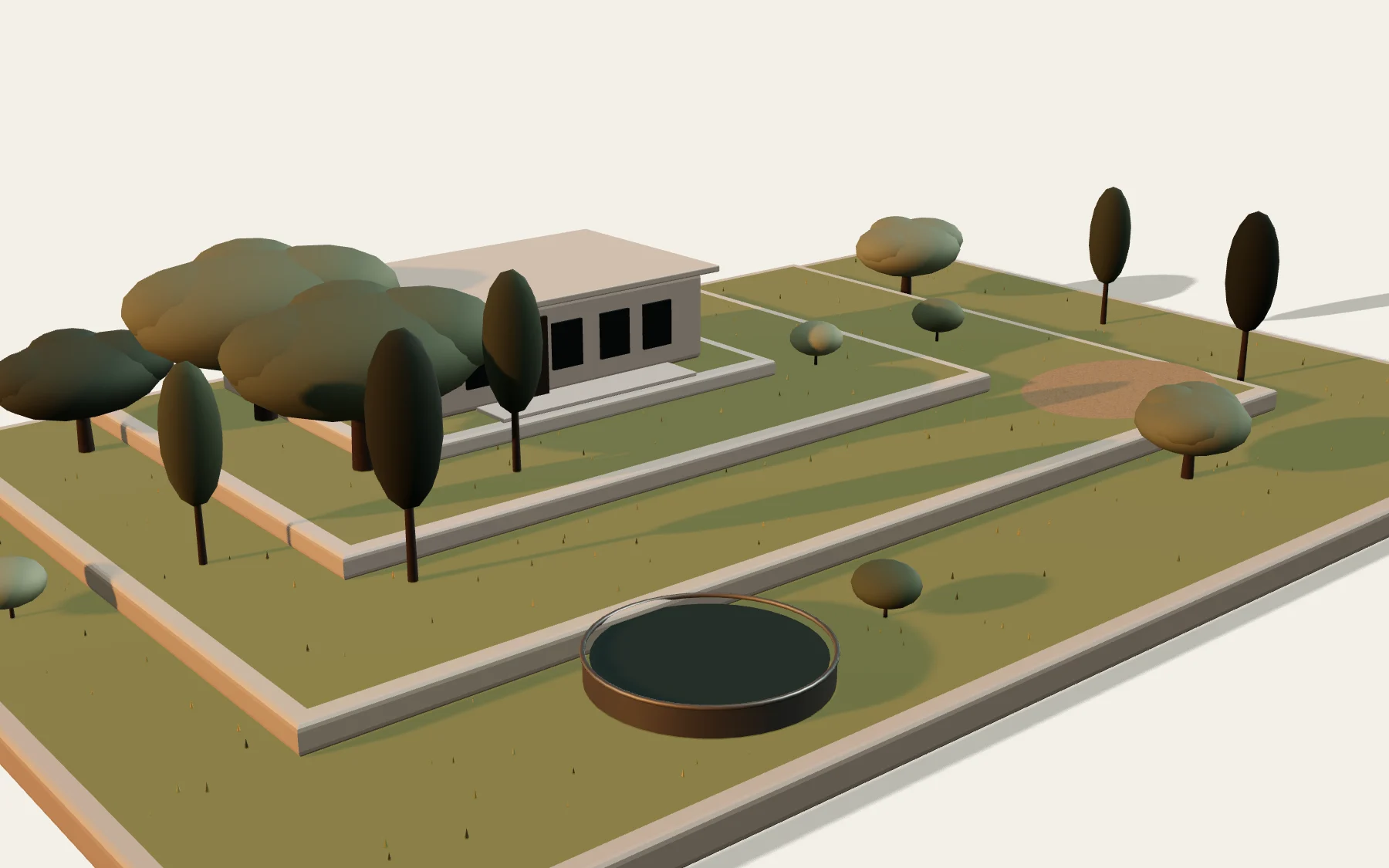
Ten years on the study model
Year0
Install day. It looks thin. It's supposed to.
Establishment watering twice a week. Deer fencing comes down in spring.
The meadow closes. Watering drops to monthly.
Live oaks shade the west wall.
Summer cooling bills down a third. No lawn to mow.
Year 0. Install day. It looks thin. It's supposed to.
Three gardens
10
Driftwood · 11 acres
The cedar cut
Ashe juniper came off the west slope. Little bluestem and sideoats went back on the caliche, and the live oaks stayed where they already held the hill.
Year 0 was a thin seed. By year ten the draw stays covered through August, and there is no lawn to water.
5
Wimberley · 6 acres
Tank house
A dry creek and a stock tank that had silted in. We rebuilt the tank as the water, kept the cedar elms, and stopped the grade before it reached the porch.
At year five the elms shade the west wall. The tank holds, and the drip is only on the new trees.
3
Spicewood · 14 acres
Ridge court
Deer pressure on a ridge above a caliche road. Limestone terraces take the slope, the court is gravel, and the plant list is what the deer already refuse.
Year three is when the meadow closes between the walls. Watering has dropped to once a month.
Twelve plants that get through August.
Plant index
A short list we actually specify on caliche. Common name, Latin name, and what it drinks after the fence comes down.
Year two was the test. August hit 104 and the meadow stayed put where the old lawn had fried. We water once a month now.
MaraDripping Springs
They said the tank would look empty the first fall. It did. By year three the cedar elm had closed over it.
ColeWimberley
Nobody pushed a lawn. The drawing showed the ridge at year ten, and the terraces are actually getting there.
HelenSpicewood
West of Austin, two to twenty acres.
Dripping Springs, Wimberley, Spicewood, Driftwood, Johnson City, Fredericksburg.
Built work usually lands between $90,000 and $650,000, phased over one to three seasons. We plant in fall, when the heat has broken and the roots have a chance before August.
Phased budgets, and partner lenders for larger builds. A master plan is the first piece, from $14,000 to $40,000, and it is what the phasing is drawn against.